✕
✨ ⭐ ✨ 💫 🧠 Online course on ADHD

Understand your child, or yourself,
at last, truly.

The first course designed by neuropsychologists to understand ADHD, in a child as in an adult: diagnosed, or simply attention, restlessness or impulsivity that raise questions. Scientific, accessible, interactive.

On this page:🎬 Family films🧪 Screening questionnaire: my child or myself🎁 Free PDF guide❓ FAQ
Understand your child — a parent and a child who understand each other
⭐ Created by two neuropsychologists
📚 12 complete modules
⏱️ ~10h of content
🔬 Scientifically validated

Discover more↓
💬 True stories

Families just like yours

A mum who was finally heard. Two neuropsychologists sharing why they created it all. A 16-year-old who finally understood himself.

Diverse families understanding their child

Three 2-minute animated films. Click a thumbnail to pick a film; when one ends, the next one starts by itself.

Nathan's mum tells Lucie, neuropsychologist, about years of struggle, the diagnosis, and the way forward. Animated film, 2 min 11.

❌ The 3 myths that undermine your child
These misconceptions hold too many families back. Here is what the science actually says.
✗
MYTH #1: "He's just a badly-behaved child"
This myth makes parents feel guilty and stigmatises the child.
✅THE SCIENTIFIC TRUTH:

ADHD is a neurobiological condition documented through brain imaging, genetics and brain chemistry. The dopamine and noradrenaline systems work differently. It has nothing to do with parenting.

✗
MYTH #2: "The medication is dangerous and turns children into zombies"
This myth stops children from benefiting from treatment that could help them.
✅THE SCIENTIFIC TRUTH:

ADHD medications are backed by decades of research attesting to their effectiveness and safety. They do not alter the personality but allow the brain to function better. The decision is always shared between the doctor and the family.

✗
MYTH #3: "He'll grow out of it"
This myth delays support and leaves the child to struggle.
✅THE SCIENTIFIC TRUTH:

A majority of children with ADHD (according to studies, 50 to 65%) still have symptoms in adulthood. The earlier the support begins, the better the outcomes for self-esteem, academic success and social relationships.

🔍 Quick screening

Is my child showing signs of ADHD?

This questionnaire is not a diagnostic tool. It helps you spot signs that deserve clinical attention. Only a healthcare professional can make a diagnosis.

A thoughtful person, between questions and kindness
⚠️

Important: This questionnaire draws on the clinical criteria of the DIVA-5 and the DSM-5-TR. It is in no way a substitute for a neuropsychological assessment or a medical consultation.

Question 1 / 18
Inattention

Loading…

🎁 Choose your free PDF guide
4 scientifically validated guides. One per email address — choose the one that speaks to you most today.
🌅
Mornings without shouting
8 changes to transform the most stressful moment of the day.
12 pages · routines + the science of waking up
✓ Choose this guide
🌋
My child is having a meltdown
A 5-minute toolkit — before, during and after the emotional outburst.
8 pages · the 3 phases of a meltdown + quick responses
✓ Choose this guide
📕
10 phrases to stop saying to your child with ADHD
…and what to say instead to protect their self-esteem.
15 pages · knee-jerk phrases vs kinder alternatives
✓ Choose this guide
⭐
30 hidden strengths in ADHD
What the research knows — and never tells families or children.
10 pages · 6 categories of documented strengths
✓ Choose this guide
🎓 A course created by qualified professionals
Designed by qualified professionals with real experience in the field of neurodevelopmental conditions.
🧩
Annie Pellardy
Neuropsychologist · Psychotherapist · Hypnotherapist
Master's degree in Neuropsychology (University of Lyon 2)
Private practice · Lecturer at Lyon 2
Founder of IPSANE
🧠
Clémence Joubert
PhD in neuropsychology
PhD in Neuropsychology (University of Lyon 2)
Private practice · Lecturer
Co-founder of IPSANE
✅ Quality guarantee: Every module is reviewed and validated by several professionals to ensure scientific accuracy and clinical relevance.
🎓 What the full course includes (12 modules)
Around 10 hours of scientific content and practical tools.
✨ Animated videos · Audio summaries · Comics · Mind maps · Toolkits · Quizzes · Scientific references (PDF)
The history of ADHD
Module 1 · 45 min

📜 The history and evolution of ADHD

From George Still (1902) to today. Animated timeline, research pioneers, the evolution of the DSM.

✨ You'll understand why your child is neither "badly behaved" nor "lazy" — it's neurological, and it has been known for 120 years.
Understanding ADHD
Module 2 · 50 min

🧠 Understanding ADHD — The basics

The 3 profiles (the dreamer, the energetic one, the chameleon). Key symptoms. Interactive mind maps.

✨ You'll identify your child's exact profile and stop making pointless comparisons.
The origins of ADHD
Module 3 · 40 min

✨ The origins of ADHD

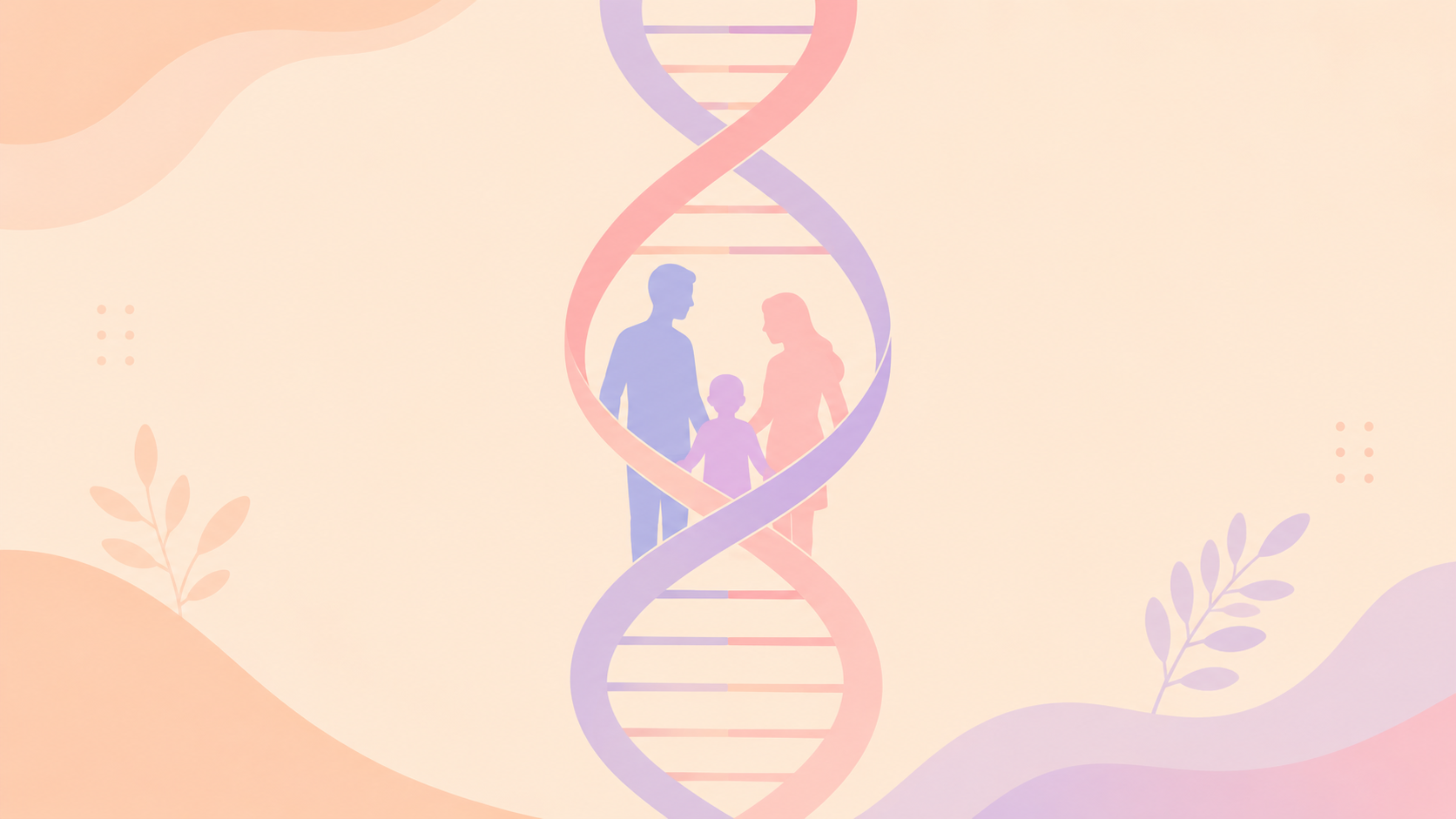
Genetics (70–80%), prenatal and perinatal factors, brain injury, myths to debunk.

✨ You'll know how to answer the "it's your fault that…" comments and set down the weight of parental guilt.
How the brain works
Module 4 · 50 min

💡 How the brain works

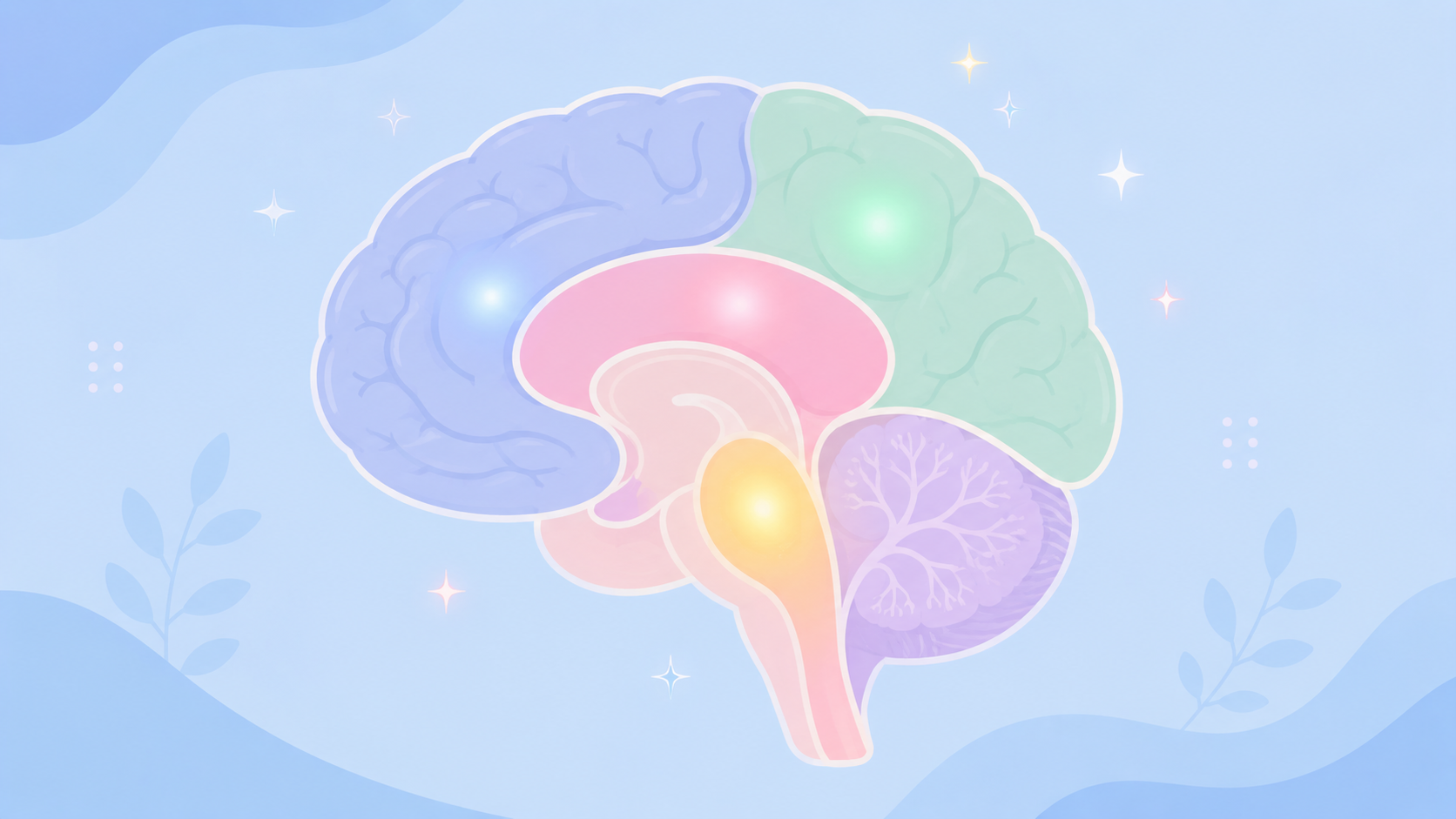
4 key brain regions. Dopamine and noradrenaline. The amygdala and emotions. Delayed maturation.

✨ You'll be able to explain the "why" clearly to the school, to grandparents and to your child themselves.
Executive functions
Module 5 · 45 min

⚙️ Executive functions

Working memory, inhibition, flexibility, planning. 4 interactive demos so you can experience them yourself.

✨ You'll finally understand why homework takes 3 hours in your home instead of 30 minutes.
Attention
Module 6 · 55 min

🔍 Attention and concentration

The 5 types of attention. Hyperfocus. Clinical case studies. Strategies tailored to each profile.

✨ You'll set up routines that genuinely work, not the ones "that work for everyone else".
Hyperactivity
Module 7 · 55 min

⚡ Hyperactivity

Physical, verbal and mental hyperactivity. How it changes with age. Case studies. Practical management tools.

✨ You'll learn to channel without suppressing — and to protect your child's energy as a strength.
Impulsivity
Module 8 · 1h

🔥 Impulsivity

The 3 faces (cognitive, behavioural, emotional). 3 comics. Practical strategies.

✨ You'll handle meltdowns without shouting, and give your child the keys to emotional regulation.
Co-occurring conditions
Module 9 · 50 min

🤝 Co-occurring conditions (comorbidities)

ODD (40–60%), anxiety disorders (30–40%), learning disorders, ASD. A multidisciplinary approach.

✨ You'll know when to look beyond ADHD — and how many "hidden" conditions can co-exist.
Everyday impact
Module 10 · 45 min

🏠 Everyday impact

4 areas of life: school, family, social relationships, self-esteem.

✨ You'll actively protect your child's self-esteem — the most fragile and most precious pillar of all.
ADHD across the ages
Module 11 · 50 min

👶 ADHD across the ages

Early childhood, primary school, adolescence, adulthood. 4 clinical case studies to picture how it changes.

✨ You'll anticipate the challenges ahead and prepare your child to become a fulfilled adult with their ADHD.
Assessment and diagnosis
Module 12 · 1h 10m

🏥 Assessment, diagnosis and support

A 5-step pathway. A multidisciplinary team. Non-medication interventions. The MDPH (French disability office).

✨ You'll know exactly who to consult, in what order, and which rights to claim for your child.
✨ What this course will change for you
Real results, from the very first hours.
🧠
Truly understand
Stop blaming yourself. Understand what's happening in your child's brain thanks to clear, accessible scientific explanations.
🛠️
Practical strategies
Scientifically validated tools that you can put into practice as early as the next morning.
🤝
Become an effective partner
Work with the school and healthcare professionals with a firm grasp of the technical terms and what's at stake.

🎯 Are you ready to transform your family's everyday life?

Get access to all 12 complete modules with every comic, animated video, mind map and downloadable tool…

🧠 Why you can trust us
A course built by practising clinicians, not by marketers.
🎓

Designed by 2 qualified neuropsychologists

Both are neuropsychologists in private practice — one also a psychotherapist, the other a PhD in neuropsychology. Every week they see families facing the same questions. This course answers those questions, plainly and directly.

🔬

Scientific sources for every module

Every statement is referenced (DSM-5-TR, research by Barkley and Greene, INSERM, HAS). No guesswork, no "miracle method". Serious content, made accessible.

📣 Pre-launch under way. The first public reviews are on their way. You'll be among the very first to discover this carefully crafted course.
❓ Frequently asked questions
Answers to the questions most people ask before starting.
How long do I have access to the course? +

6 months' access after purchase. You can revisit each module as many times as you like during that period, with no subscription and no extra cost.

My child doesn't have an ADHD diagnosis yet. Is the course still relevant? +

Yes, absolutely — you don't need a diagnosis to benefit. The course helps you understand how your child works, spot and describe the signs, and put practical everyday strategies in place: it's useful whether the diagnosis is already made, in progress, or simply being considered. It also sheds light on the diagnostic journey and gives you the tools to talk with healthcare professionals.

I don't have a diagnosis myself. Is the course relevant for me? +

Yes. Many adults recognise the signs of ADHD in themselves without ever having been assessed, sometimes at the very moment their child is. The course explains how the brain works, attention, inner restlessness and impulsivity at every age, with a whole module on ADHD across the lifespan. It does not replace an assessment: if you recognise yourself, it will help you talk about it with a professional, and the adult screening questionnaire on this page is a good first step.

From what age is this course suitable? +

The content covers every stage of life (Module 11: early childhood 2-5 years, primary school 6-11 years, adolescence 12-18 years, and adulthood). Most of the strategies apply from as early as 4-5 years right through to adulthood.

Does the course replace seeing a professional? +

No. The course is psychoeducational and informative in purpose. It complements (and prepares you for) the relationship with healthcare professionals, but does not replace it. It gives you the vocabulary and understanding to be an active partner in your child's care, or your own.

How long will it take me to work through all the modules? +

About 10 hours of content in total, at your own pace. Most people finish in 4 to 6 weeks (30-60 min a week). Each module can also be followed on its own.

Is there any support if I have a question? +

Yes, you can contact the team by email at contact@ipsane.com. We reply within 48 working hours to any educational or technical question.

Can I get a refund if the course isn't right for me? +

As the course is digital content with immediate access, the right of withdrawal does not apply (article L221-28 of the French Consumer Code). That said, if there is a genuine technical problem, we will always find a solution.

Why 504€? What's behind the price. +

To put it in perspective:

  • • 1 session with a neuropsychologist in private practice: 50–120€
  • • 1 full neuropsychological assessment: 400–800€
  • • 1 good specialist book: 20–30€
  • • 1 two-hour talk: 40–80€

For 504€, you get the equivalent of 10 hours of structured content designed by two qualified neuropsychologists, with downloadable tools, animated videos and 6 months' access. Cheaper than an assessment, more interactive than a book.

What happens after the 6 months of access? +

After 6 months, you can extend your access at -50% (half the original price) for a further 6 months — for example 252 € for the full course, or 12,50 € to 32,50 € for a single module, depending on the one you choose.

And here's the good news: the downloadable resources (toolkits, PDF sheets & guides) remain yours to keep with unlimited access — once saved, they're yours, even after your online access ends.

✨ Before / After

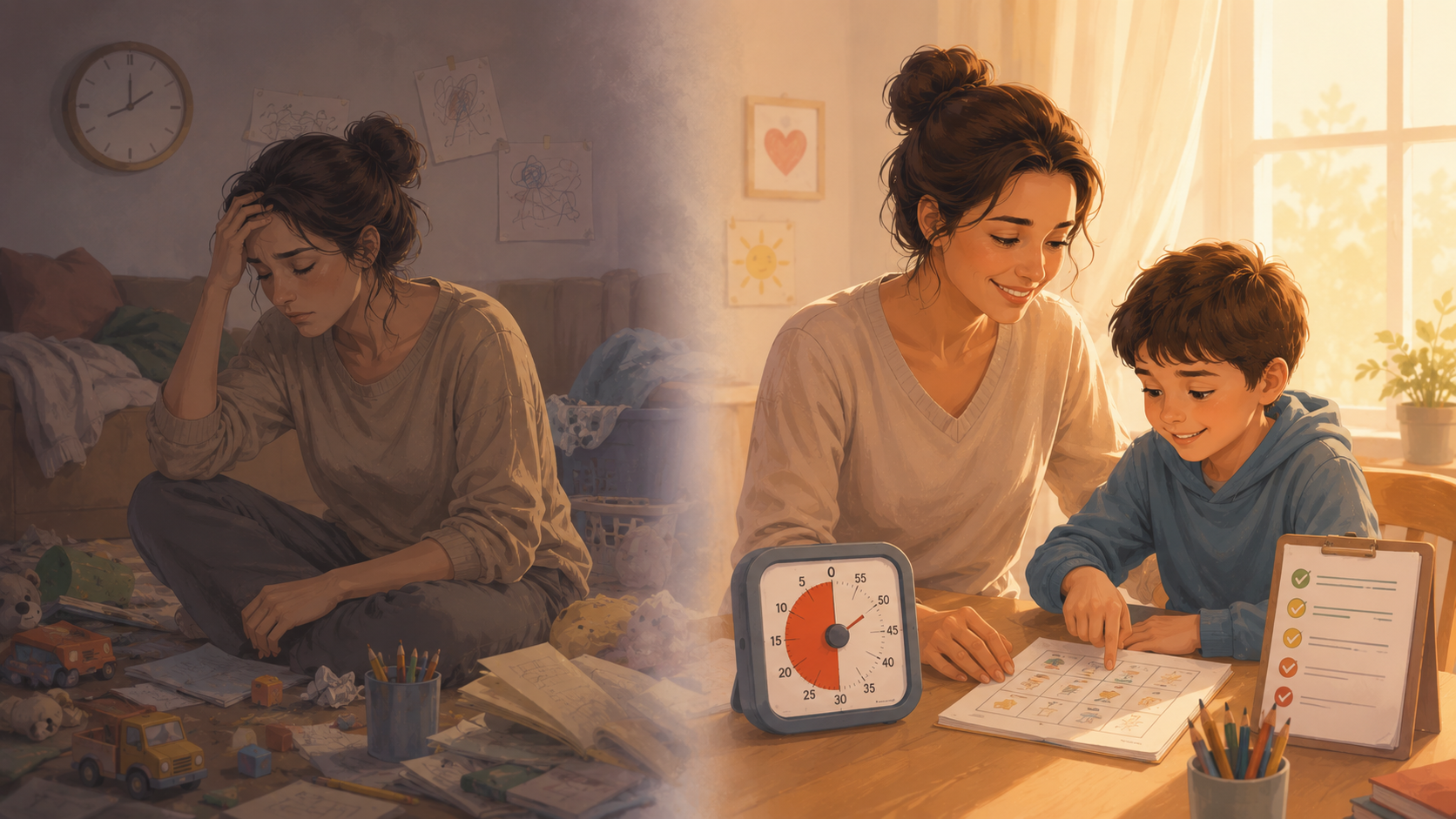
From exhaustion to confidence

To understand is already to transform. The course gives you the tools to move from conflict to warm, supportive parenting.

Before/after: an exhausted person who regains confidence
A child who is understood and at peace

"Your child is not a problem to be solved. They are a child to be understood."

Choose your access
Start with a single module or get access to everything. The choice is yours.
Already have access, purchased or offered by email? Log in here with your email address, no password needed.
⭐ BEST VALUE
Full access
Full course — 12 modules
Value: 560 €
€504
6 months' access
✅ You save 56 € (-10%)
💳 or pay in 3 interest-free instalments
  • All 12 complete interactive modules
  • All the animated summary videos
  • All the comics
  • Interactive maps (the brain in action, mind maps…)
  • A validation quiz per module
  • A toolkit per module (printable PDF sheets & guides)
  • Downloadable mind maps & summary sheets
  • Updates included
  • 6 months' access
Flexible access
A single module
from25€
depending on the module · 6 months' access
🟢 25 € (1) · M1 History
🔵 35 € (3) · M3 Origins · M10 Everyday impact · M11 ADHD across the ages
🟣 45 € (2) · M4 How the brain works · M5 Executive functions
🟡 55 € (5) · M2 Understanding ADHD · M6 Attention · M7 Hyperactivity · M8 Impulsivity · M9 Co-occurring conditions
🔴 65 € (1) · M12 Assessment, diagnosis & care
  • 1 complete interactive module of your choice
  • Animated summary video
  • Comics & maps
  • Validation quiz
  • The module's toolkit (PDF sheets & guides)
  • Downloadable summary sheet
  • 6 months' access
🔒 Secure payment⚡ Instant access📅 6 months (renewable at -50%)📧 contact@ipsane.com